The West Virginia Land Stewardship Corporation (WVLSC) is seeking proposals from a Qualified Environmental Professional (QEP) to provide environmental assessment and related technical services in support of its land revitalization and redevelopment initiatives. The selected QEP will assist with environmental site assessments, regulatory coordination, reporting, and compliance activities consistent with federal and state standards. Firms must demonstrate qualifications consistent with EPA and ASTM requirements and experience in Brownfields or similar redevelopment projects. Interested parties may download the full Request for Proposals (RFP), including scope of work and submission instructions, at the link below.
What's the deal with rural land banks?
What IS the deal with rural land banks? WVLSC Executive Director Taylor Bennett answers your questions in this interview with the Center for Community Progress.
https://communityprogress.org/blog/rural-land-banks-wva-taylor-bennett/
The Latest from the WVLSC
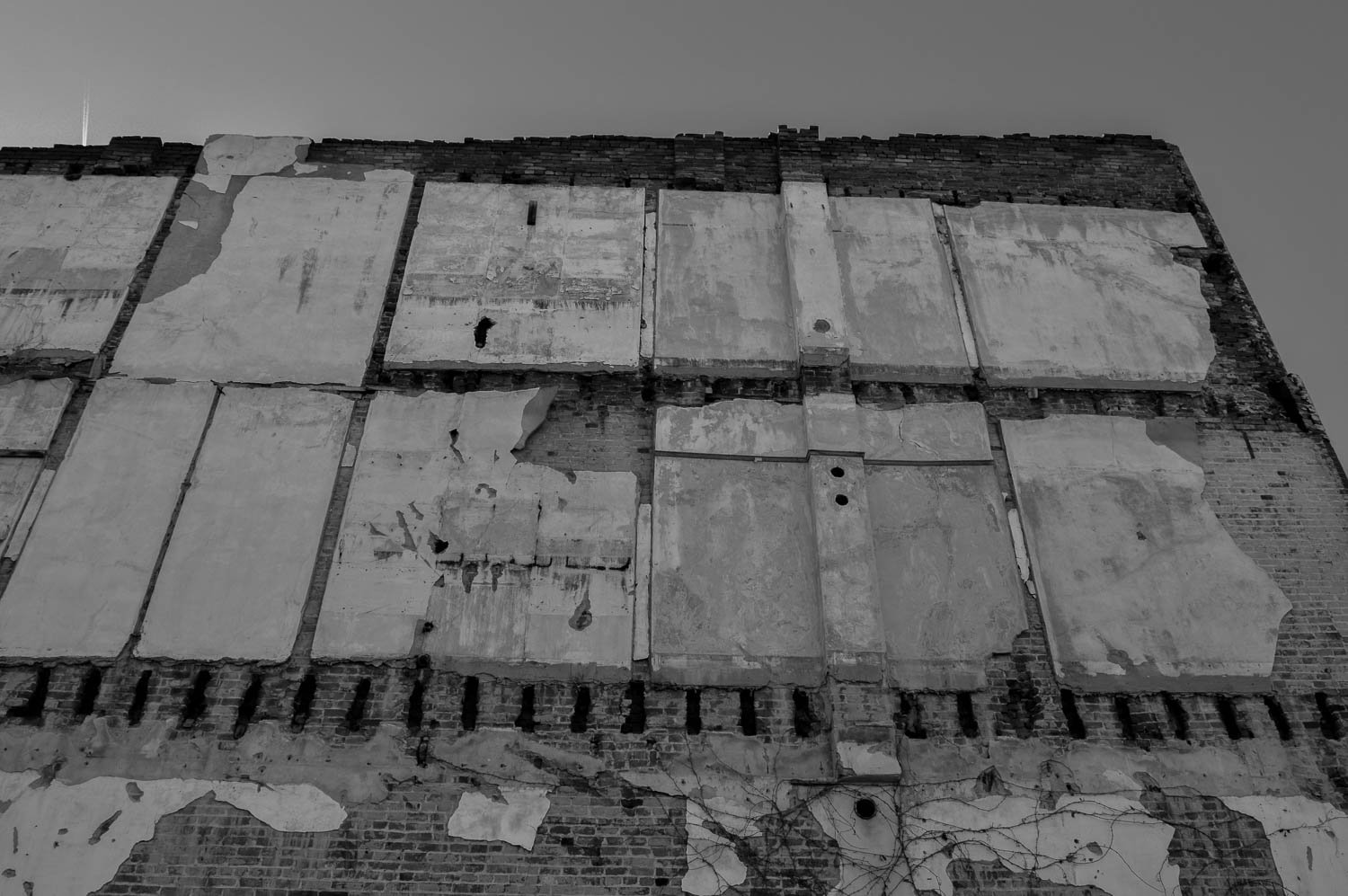
RAISE Program Receives $1 Million Earmark to Address Dilapidated Buildings
Thanks to a request by Senator Manchin and his staff, the WVLSC will receive $1,000,000 in congressionally-appropriated funds this year from the HUD Economic Development Initiative to pilot its Rehabilitation And Improvement for Structures Endowment (RAISE) Program.
This project stems from the WVLSC’s ongoing work with West Virginia’s Abandoned Properties Coalition, a statewide network dedicated to solving West Virginia’s widespread abandoned and dilapidated buildings problem. The WVLSC will issue grants for demolition and rehabilitation of problem properties to communities with populations of 15,000 or less that have developed a bad buildings inventory through participation in the WVU Bad Buildings Program.
Join us on Wednesday, June 29th at 1 pm for an informational webinar: Bridging the Gap: How to Obtain Grant Funds through the WVLSC’s RAISE Program. Register in advance via this link.
This Federal investment demonstrates renewed attention to an ongoing challenge and complements the statewide demolition work being done by the WV Department of Environmental Protection through its recently funded Reclamation of Abandoned and Dilapidated Properties Program.

Warner Theatre Reuse Plan Completed
This winter we collaborated with local stakeholders to help further the community-driven vision of reviving the historic Warner Theatre in downtown Morgantown. Using funds from our EPA Assessment Grant, we developed a reuse plan for the Theatre and surrounding area that includes remediation cost estimates, a detailed analysis of parking and access needs, and placemaking concepts to incorporate other assets on South High Street. We’re excited to see this project moving forward!
Advances in Land Reuse in WV
During the 2022 Legislative Session the WV Legislature passed SB 552, which streamlines the process of selling property tax debt in West Virginia. The revised law simplifies a long-standing and complicated system of county and state tax sales. The entire process has been shortened, and there will now be only one tax sale, which will be managed by the WV State Auditor’s Office. The new law also gives entities such as local governments, Land Reuse Agencies, and Urban Renewal Authorities the right to take ownership of these abandoned properties immediately following tax sales, thereby reducing the time that properties deteriorate before being put back into productive reuse.
Hear what State Auditor JB McCuskey has to say about SB 552 on Metro News.
THE LATEST FROM THE WVLSC
Raze International, Inc. Begins Remediation of Smokestacks Property

The WVLSC engaged remediation contractor Raze International to clean up its first Land Bank property, a 2.31-acre parcel known as the Smokestacks Property in the Morgantown Industrial Park. Raze began work on December 6th and will demolish and remediate two brick buildings on the property in the coming weeks. We considered sealing off the smokestacks and leaving them intact, but that option proved to be prohibitively expensive. We therefore plan to seek additional grant funding to remove the smokestacks from the property.
Truist Grants WVLSC $25K to Plan for Land Bank Partnership with State Auditor
The WVLSC will use Truist funds to develop a plan to grow its capacity as a statewide Land Bank dedicated to promoting economic development by facilitating the reuse of underutilized properties. For its initial focus area, the WVLSC plans to acquire property that was sold for nonpayment of taxes and now resides in the State Auditor’s Office. We will then clear title and help prepare the property for development. We will partner with multiple housing organizations throughout West Virginia to transfer those properties that are fit for housing to local housing organizations at a below-market rate. We will prioritize properties located within each housing partners’ focus area, with the dual goals of providing additional buildable (or improvable) lots and eliminating blight.
Environmental Assessment and Structural Analysis Conducted at Former Albright Power Plant

Using funds from our EPA Brownfields Assessment Grant, the WVLSC’s consultants conducted a Phase I environmental assessment and analyzed the cost of removing all structures on the former Albright Power Plant property that are unlikely to be repurposed. Knowing more about these costs will allow the WVLSC and its partners to realistically evaluate the options for the property set out in the reuse plan we created for the area earlier this year, which envisions repurposing the power plant site, removing the adjacent dam, and creating new opportunities and amenities for outdoor recreation nearby.
Phase I Assessment Conducted at Morgantown’s Warner Theatre

This fall we conducted a Phase I environmental assessment of the Warner Theatre in downtown Morgantown using funds from our EPA Brownfields Assessment Grant. Local stakeholders and downtown property owners hope to build upon recent improvements to south High Street and see the rehabilitation of the Warner as an important next step. Having a Phase I in hand will help potential developers better understand the property.
Welcome to our Third Executive Director, Taylor Bennett

Taylor hails from a small town in rural western New York, situated in the northern reaches of the greater Appalachian Region. She is delighted to be making her home in West Virginia. Her lifelong affinity for the hills has developed into a deep respect for the many ways the land supports our communities, economies, and culture, and a dedication to ensuring that its reuse provides sustainable economic benefit for all West Virginians.
Taylor comes to the West Virginia Land Stewardship Corporation with a master’s degree in International Peace and Conflict Resolution from Arcadia University and a decade of experience in community, economic, and agricultural development; environmental preservation; and non-profit management. Formerly the Director of Community Based Policy at the WV Community Development Hub, she spent the last four years in West Virginia’s state capitol advocating for new ways to turn problem properties into economic opportunities. She also focused on land banking and creating systems-level changes to support both commercial and residential property redevelopment.
In her new role, Taylor intends to use these skills to continue making both the systemic and site-by-site changes that West Virginia’s communities and economies need to thrive.
When she’s not taking on challenges related to economic development, land reuse, and environmental preservation, Taylor can be found admiring the WV hills on horseback, chasing her three dogs around the yard, or doting on her growing collection of house plants and ever-expanding garden. She lives in Fairmont with her spouse and their six-year-old son.
We very much appreciate the hard work and contributions of Patty Hickman over the past few years and wish her the best of luck.
THE LATEST FROM THE WVLSC
Manchin Recommends Inclusion of $1 Million Earmark to WVLSC for Dilapidated Buildings Program
Senator Manchin requested $1,000,000 in HUD Economic Development Initiative grant funds be allocated to the WVLSC this session. WVLSC will use the money to establish the Rehabilitation And Improvement for Structures Endowment (RAISE) Program, through which it will issue grants to communities throughout West Virginia to demolish or rehabilitate buildings. This pilot program is part of WVLSC’s ongoing work with West Virginia’s Abandoned Properties Coalition, a statewide stakeholder network dedicated to solving West Virginia’s widespread abandoned and dilapidated buildings problem. The funding is subject to approval by the Senate when they pass the final budget this fall.
Reuse Plan Created for Former Albright Power Plant and Surrounding Area

Using funds from a Just Transition Fund Grant, the WVLSC convened a task force to consider options for reusing the former Albright Power Plant property. The Task Force includes Friends of the Cheat, the Preston County Economic Development Authority, the Mountaineer Country Convention and Visitors Bureau, and the Northern Brownfields Assistance Center. Together we created a reuse plan for the area that envisions repurposing the power plant site, removing the adjacent dam, and creating new opportunities and amenities for outdoor recreation nearby.
RFQ Issued for Smokestacks Property

This summer the WVLSC issued a Request for Quotation for a remediation contractor to clean up a 2.31-acre parcel known as the Smokestacks Property in the Morgantown Industrial Park. The project is funded by a $500,000 U.S. Environmental Protection Agency Brownfields Cleanup Grant. Construction will begin this fall.
Technical Assistance Provided to the City of Martinsburg for Historic Textile Mill

Thanks to a FOCUS grant from the Northern Brownfields Assistance Center, the WVLSC helped the City of Martinsburg assemble and summarize environmental reports for a former textile manufacturing facility known as Interwoven Mills. Located in the in the heart of downtown in what’s known as the Boomtown Historic District, the site is a prime location for a mixed-use development and has attracted the attention of multiple developers. The WVLSC’s technical assistance helped calculate rehabilitation costs and determine what environmental assessments are still needed to eliminate the uncertain cost of redeveloping the property.
We’re Hiring!
Are you an innovative thinker who wants to make a difference in West Virginia’s future? Are you interested in repurposing formerly used properties to improve local communities? The West Virginia Land Stewardship Corporation seeks its next Executive Director to lead its statewide revitalization efforts. To read the full job posting, click here.
THE LATEST FROM THE WVLSC
Grant Received to Provide Technical Assistance for Martinsburg’s Interwoven Mills Site
The WVLSC received a grant from the Northern Brownfields Assistance Center to provide technical assistance to the City of Martinsburg on a 7.16-acre former textile manufacturing facility known as Interwoven Mills. Located in the Boomtown Historic District, the site is a prime location for a mixed-use development. The property contains 17 buildings in various states of disrepair, several of which contain asbestos and other contaminants left from the site’s prior use as a large textile mill. While developers have expressed interest in rehabbing the property, the unknown cost of environmental cleanup has stalled purchase negotiations. The WVLSC will assemble and summarize existing environmental reports, help the City fund and complete any additional assessments that are needed, and calculate rehabilitation costs. With those in hand, both the City and interested developers will be better positioned to maximize this historic property’s full potential.
Conservation Program Kicks Off with Acceptance of Two Bat Easements and Agreement with WVDEP’s In Lieu Fee Program

This Spring Allstar Ecology transferred two bat easements to WVLSC for long-term stewardship. Allstar completed the mitigation projects as compensation for damages caused by a gas company’s development in Doddridge County. The two properties provide roosts and houses for bats and are protected in perpetuity by conservation easements that prevent future development or interference with the preserved bat habitat. The WVLSC will monitor the properties each year and manage the endowment funds set aside to fund long-term stewardship.
This winter the WVLSC also entered into an agreement with the WV Department of Environmental Protection’s In Lieu Fee Program to serve as the long-term steward of the mitigation projects they construct. The WVLSC will monitor and maintain these projects, which are on both public and private land, and will serve as the easement holder for those that are protected by conservation easements.
RFQ to be Issued for Smokestacks Property this Spring

Last summer the WVLSC was awarded a $500,000 U.S. Environmental Protection Agency Brownfields Cleanup Grant to remediate the 2.31-acre parcel known as the Smokestacks Property in the Morgantown Industrial Park. On February 24th, the WVLSC made the required Analysis of Brownfield Cleanup Alternatives available for public comment at the Morgantown Public Library and on its website, www.wvlsc.org. We will issue a phased request for proposals for demolition and cleanup at the conclusion of the 30-day comment period. Contractors will remove contaminated materials associated with the property’s former use as a water treatment plant and coal-fired power plant and prepare the site for redevelopment. Once remediation is completed, Enrout plans to build a loading and storage facility on the site to make transferring commodities hauled in by train more efficient.
Just Transition Fund Planning Continues for Albright

Last year the WVLSC received a grant of Just Transition Fund funds from the Northern Brownfields Assistance Center to create a strategic plan for the redevelopment of the former Albright Power Plant property in Preston County. The goal of the plan is to work with local stakeholders to plan for reuse of the property that promotes local businesses and recreational tourism. We convened a team consisting of Friends of the Cheat, the Preston County Economic Development Authority, and the Mountaineer Country Convention & Visitors Bureau. Although the public meetings we planned to hold to solicit input and ideas were delayed by the pandemic, we continue to engage with our stakeholder team. This spring we will obtain a conceptual rendering to depict possible improvements on and around the property, including nearby recreational opportunities, and develop strategies to ensure these changes complement and enhance one another.
EPA Assessment Grant Funds Asbestos Abatement Plan for Historic Morgantown Post Office

Last summer the WVLSC used funds from its EPA Brownfields Assessment Grant to conduct a lead and asbestos survey at the Historic Morgantown Post Office in downtown Morgantown. The building is home to both the Morgantown Arts Center and Your Community Foundation and has various structural issues due to its age. After our consultants found asbestos in the building, we used additional funds from our Assessment Grant to put together an Asbestos Abatement Workplan to remove the materials safely.
This winter we continued connecting with local communities who might benefit from assessment funds, including the City of Westover. Additional funds remain available for qualified projects. More information about these funds is available on our website.
The Latest from WVLSC
WVLSC Wins $500,000 EPA Grant
Remediation of Industrial Park’s Smokestacks Property Begins This Fall

The WVLSC was awarded a $500,000 U.S. Environmental Protection Agency Brownfields Cleanup Grant to prepare a 2.31-acre parcel in the Morgantown Industrial Park for redevelopment. The WVLSC will use Cleanup Grant funds and in-kind contributions from industrial Park owner Enrout Properties to remediate environmental hazards and demolish dilapidated structures on the property. Once remediation is completed, Enrout plans to build a loading and storage facility on the site to make transferring commodities hauled in by train more efficient.
This is just one part of a larger effort to strengthen the Park’s infrastructure. Enrout is currently updating its barge access and working closely with state and county officials on development of a new interchange off I-79 that would improve access to the Park. The combination of interstate, rail, and barge access will help attract new businesses and provide better route options for companies hauling large loads.
Seeking New Land Bank Properties
The WVLSC Land Bank focuses on previously-used, strategically located commercial or industrial properties whose current owner is willing to sell or convey. It assesses and remediates each property’s environmental issues and leverages grant funds and public and private investment to help communities maximize their developable land and stimulate economic growth. Using the WVLSC as an interim property owner can provide access to funding that isn’t available to individuals or for-profit entities and help put problem properties back to good use.
If you know of a property that might be a good fit, contact us to find out more.
Sustainable Planning and Assessment for Recreation and Commerce (SPARC) Assessments Continue

This Spring the WVLSC conducted limited Phase II environmental assessment of the Historic Morgantown Post Office building on High Street using EPA Brownfields Assessment Grant funds. The building is owned by Your Community Foundation and is currently undergoing a feasibility study to determine plans for its historic preservation and renovation.
The WVLSC plans to conduct a Phase I at another riverfront property in the coming weeks and will also be conducting additional assessments at the Smokestacks property in the Morgantown Industrial Park in preparation for the development of a remediation plan for the property.
Empower Albright Project Progresses

Despite limitations on public meetings due to Covid 19, the task force assembled to address the planned reuse of the former Albright Power Plant and the removal of the associated dam on the Cheat River continues to make progress. This Spring the WVLSC entered into a Memorandum of Understanding with the Friends of the Cheat to coordinate efforts to safely remove the dam.
We’re Moving!
Although we loved our time in the Seneca Center, we are relocating our office to a new co-working space in downtown Morgantown. The WVLSC will be one of several non-profits located in the upstairs of the Spruce Center, which was recently purchased by the Morgantown Land Reuse and Preservation Agency. The building is next to the Farmers Market Pavilion downtown and is now part of the City’s downtown campus.
The Latest from the WVLSC
WVLSC Heads Empower Albright Project Funded by Just Transition Fund Grant
The WVLSC and the Northern Brownfields Assistance Center received a planning grant from the Just Transition Fund to spearhead the Empower Albright Project. We convened a task force that includes Friends of the Cheat; the Preston County Economic Development Authority; the Preston County Task Force; and the NBAC to plan for the redevelopment of the Albright Power Plant property and the nearby Cheat River recreation area. We’ll work with this group and the larger Preston County community to learn how current economic interests and existing initiatives relate to future redevelopment goals. We will use our findings to develop a strategic plan to maximize the economic development potential and tourism opportunities presented by the Plant property and the surrounding area.
Phase II Environmental Assessment at Smokestacks Property Near Completion

WVLSC’s environmental consultants sampled soil and groundwater from the smokestacks property in the Morgantown Industrial Park in order to prepare a Phase II environmental assessment. Lab reports showed some groundwater contamination and asbestos-containing materials in the buildings and nearby soil. The next step for the property is to develop a plan to remediate the environmental concerns and demolish the structures that impede re-development.
Coordinating with WV’s Abandoned Properties Coalition

Early this year, the WVLSC began working with the Abandoned Properties Coalition to help address the large numbers of abandoned and dilapidated properties throughout West Virginia. Coalition members will hold a strategy meeting this month to discuss funding options for demolishing the blighted buildings that plague over 20,000 properties state-wide. The WVLSC’s mission to address environmental issues in order to get unused properties back into productive use, as well as to provide long-term stewardship of such sites, fits with the Abandoned Properties Coalition’s goals. The WVLSC can help with planning for long-term fund sustainability to address abandoned and dilapidated properties, as well as with the administration and oversight of the associated program.
THE LATEST FROM THE WVLSC
WVLSC LAND BANK ACQUIRES FIRST PROPERTY

In November, the WVLSC Land Bank acquired its very first property: a 2.31-acre parcel informally known as the Smokestacks property, located in the Morgantown Industrial Park. The site housed a coal-fired power plant and a water filtration plant that serviced the U.S. government’s ordnance and chemical manufacturing facilities during WW II. Despite its prime location in the center of an active industrial park, the cost of removing the property’s structures and properly handling the environmental issues caused by former operations have thus far rendered its redevelopment economically unfeasible.
This fall the WVLSC used funds from its US EPA Brownfields Assessment Grant to conduct a Phase II environmental assessment of the property. In early December, we applied for a US EPA Brownfields Cleanup Grant to address the concerns identified in that report and prepare the property for reuse.
The reuse plan for the Smokestacks property includes the construction of a loading and storage facility that will eliminate the need to transfer commodities multiple times as they enter and leave the Park, thus making the Park more attractive to current and future users. As demand for both rail and barge service increases, Park owners plan to extend the existing rail spur to accommodate a full train of rail cars. Additional infrastructure improvements are in the works for this area that could complement the redevelopment of the Smokestacks property.
WVLSC APPROVED AS LONG-TERM STEWARD FOR WVDEP’S IN LIEU FEE MITIGATION PROJECTS
This fall the US Army Corps of Engineers approved the WVLSC to serve as the long-term steward of all mitigation projects undertaken by the WV Department of Environmental Protection’s In Lieu Fee Program. We will monitor the sites to ensure the long-term viability of the conservation values the projects are designed to protect and provide legal defense if those values are threatened. We will also serve as the holder of the conservation easements that protect those sites.
WVLSC WELCOMES NEW BOARD CHAIR AND ADVISORY BOARD MEMBERS
In October, Governor Justice appointed Berkeley Bentley to the position of WVLSC Board Chair. Berkeley currently serves as Deputy General Counsel to the Office of the Governor. At its November meeting, the WVLSC Board approved the formation of an Advisory Board to advise and help guide the WVLSC’s development. Advisory Board Members represent different geographical portions of the state and bring a wide range of experience. They will help guide WVLSC Staff and Board to enhance current programs and develop new projects and resources to achieve the WVLSC’s mission.
RECLAMATION OF BARBOUR COUNTY SLURRY IMPOUNDMENT CONTINUES

Contractors continue to reclaim a large slurry impoundment left behind by mining operations at a site near Century, WV in Barbour County, as part of our continued work with WVDEP’s Office of Special Reclamation. We expect reclamation to be completed in 2020.
RECLAMATION OF TWO MINING SITES COMPLETED

This Summer we wrapped up our reclamation efforts at the former Energy Marketing mine site in Barbour County. Over the past year, contractors closed off an old mine entrance, removed large amounts of debris, and grouted several large channels to funnel acid mine drainage into treatment ponds.
Our contractors also completed and began treating water in a new water treatment facility at the former LaRosa mine site next to the Monongahela River in Marion County. Engineers designed a system that neutralizes acid mine drainage by adding lime to the water before feeding it into a clarifier where metallic solids drop out. The WV DEP will monitor and maintain this facility indefinitely.
NOW ACCEPTING APPLICATIONS FOR LONG-TERM STEWARDSHIP OF LAND USE COVENANTS AND CONSERVATION EASEMENTS

The WVLSC is accepting applications from companies with long-term monitoring obligations on brownfield properties that were remediated under a state or federal environmental program. By contracting with us to conduct required site monitoring, maintenance, and reporting, responsible parties and property owners can satisfy their perpetual obligations without shifting focus away from their primary business. The WVLSC can also accept and manage endowments to allow it to address these obligations in perpetuity.

We are also accepting applications from private mitigation banks and companies that complete their own environmental mitigation projects. We’re working closely with the West Virginia Department of Environmental Protection to become both the easement holder and long-term steward of the conservation easements created under its In-Lieu Fee Mitigation Program. Depending on the need, we can serve as the easement holder, the long-term steward, or both for conservation easements and enforce deed restrictions created to protect mitigation projects.
Contact us for an Initial Screening Questionnaire to see if your project fits with our mission.
WVLSC AWARDED $300K BROWNFIELDS ASSESSMENT GRANT

The WVLSC has been awarded a $300K Brownfields Assessment Grant from the U.S. Environmental Protection Agency to conduct environmental assessments. In coordination with local communities, we will identify and select properties with high redevelopment potential to perform up to 12 Phase I and 6 Phase II assessments over a three-year period.
While the primary focus of this grant is a five-mile stretch of riverfront in Monongalia County that encompasses Morgantown, Westover, Granville, and Star City, the funds can be used to assess properties anywhere in West Virginia. Priority will be given to commercial/industrial properties that are candidates for entry into the WVLSC Land Bank to be remediated prior to being put to new use.
If you know of a property that might be a fit, please let us know!